Sunday, April 20, 2014

Child Abduction

What happens when the marriage collapses 
and children are involved?

Through relationships developed over the past few months, I have become aware of the  nightmare that Japanese family law produces for thousands of children and parents.  Hopefully the nightmare is about to end.  In order to understand what recent developments may mean for the future, I have first tried to grasp the essence of traditional Japanese family law and how it developed historically.  So I read some analyses and I will briefly summarize here.

For privacy reasons, I will not discuss my friends' or students' specific circumstances.  Suffice it to say that there is much sorrow as well as some hope that things may soon change for those whose lives have been ripped apart by divorce, separation and child abduction.

On April 1, 2014, the 1980 Hague Convention on the Civil Aspects of International Child Abduction finally went into effect in Japan.   Japan is now required to return any child taken by a parent away from the child's usual country of residence.   Along with the other G8 nations (Canada, France, Germany, Italy, Russia, UK), the United States pressured Japan's parliament to ratify the international agreement until both houses finally signed on last year.  It is well-recognized that when international marriages collapse, Japanese mothers (or in some cases, fathers) usually take the children back to Japan, leaving the other parent with NO legal recourse in Japanese courts.  Japanese family law does not recognize joint-custody so the Japanese mother is almost always awarded sole legal custody.    

As of April 1st hundreds of largely American and European fathers have hope that they will soon gain legal recourse when their children have been taken by the mother to Japan.  As signatory to the Hague Convention, Japan is NOW obligated to locate these abducted children on Japanese soil.   Besides international fathers without custody rights, thousands of Japanese fathers have also been denied parental rights.  In essence, Japanese civil law has been unconcerned with deciding custody cases in "the best interest of the child,"--beyond the belief that living in Japan is in the child's best interest--and deprives the non-custodial parent of all rights including visitation.  The most important consideration is maintaining the family unit

Understanding the historical context...
Japanese family law is based upon a household unit called the ie.  The traditional household included several generations of families with the eldest male as the "head."  He had power as well as responsibilities.  Historically this hereditary position included the duty to pay taxes and enforce government obligations such as military service.   The "head" also approved marriages, punished household members, and controlled the family business(es).  Most importantly, the government controlled its people through a strict household registry system called the koseki.  Each "head" had the duty to officially register the ie. Thus, the ie became the smallest social unit subject to law.  Japanese law had no acknowledgement of individual rights; all policies were strictly enforced through the ie.  The registry made it clear to the government who was in charge of whom.  And the family registry still does.
 
Marriages Today

Following World War II under U.S. occupation, the ie system came under pressure from the U.S. government and demands were made to guarantee individual rights in the new Japanese constitution.  To resist, Japanese leaders stalled and hoped to wait out the U.S. government.   Ultimately a compromise was reached and the nuclear family unit, not individual rights, became the basis of civil family law.  Think of the nuclear family as ONE entity and the foundation upon which all family law rests For instance, in the case of two parents with two children, the courts do not recognize four separate individuals but rather ONE family entity.  So, under Japanese law, if a mother takes the children away from their country of residence and returns to Japan, she and the children are legally registered as ONE family.
And the father is left with no legal recourse.
How quickly will the legal system change?  
(Japanese say "not anytime soon.")

Sunday, March 30, 2014

Cherry Blossoms Make Tokyo Magical!!

 Start of Viewing for 2014
Cherry blossom viewing, or "Hanami," occurs in late March to early April here in Tokyo.  The delicate, pink and white cherry blossoms  called "Sakura" turn Tokyo into a magical place.  Picnicking under cherry trees began in the 700's with the imperial family and eventually became a custom of commoners.  Today food and sake, or rice wine, is consumed under cherry trees (sometimes in large quantities!) , of which there are about 200 varieties.  Most are ornamental and bear no edible fruit.  Depending upon location, Sakura bloom  throughout Japan from late March through mid April.  The season begins in Okinawa and spreads northward to Tokyo, then to higher elevations, and eventually to the northern island of Hokkaido.  Weather forecasters carefully watch the "Sakura front" and publish peak-viewing charts (shown). The medical school near our apartment, neighborhoods parks, and nearly every green space has one or more cherry trees, making our walk to and from the subway so enjoyable.  Most government buildings and schools also have cherry trees since the new fiscal and school years coincide with Sakura viewing season.  Paper lanterns hang along the Meguro river walk near our home.  At night the trees are lit up making it perfect for a romantic stroll. The blossoms appear for approximately one to two weeks, showing off extravagant beauty before vanishing in a quick death.  As a result they have come to symbolize mortality


A Youtube movie has photos taken by Doug in Shinjuku Gyoen National Garden and along the Meguro river walk, with the accompanying music, Cherry Blossoms by Derek Fiechter.  Sakura truly is this breathtaking--only more so than pictures can show. See for yourself!  
Youtube Click here to stroll with us!


Thursday, March 27, 2014

Sin Den is Like Heaven

Having arrived in Japan three months ago with pixie-short hair, I determined the time had finally come for a professional trim.  Wanting an English-speaking salon within a 30-minute radius of our apartment, I searched the Internet to make a careful selection.  There were three.  (If you have ever experienced this, you understand the degree of trepidation it can produce, for a botched job is broadcast for a long while from atop one's noggin.)    

After doing thorough research, this is how I made my ultimate determination.
Eeny, meeny, miny, moe, 
I must choose a cut and blow,  
If it's terrible, it will grow,
Eeny, meeny, miny, moe.
 
The appointment was arranged and confirmed via email.  Despite limited options with this fine, short hair, I still hoped to convey a few suggestions before cutting commenced.  Wanted:  Stylish. Sophisticated. Sassy.  So, with this goal in mind, plus GPS and umbrella in hand, I headed into pouring rain.  

After riding a packed subway with face pressed against the door, the real adventure was about to begin.  On the street I hurried through puddles, ran up alleyways, tore around blind corners, and slammed into pedestrians.  Always guided by the shifting blue dot on my screen but rarely looking up.  After a 27-minute rush (with several oops-I'm-headed-the-wrong-way corrections), I arrived at the destination as indicated by Google Map's little "red-rain-drop icon."  But the salon was not there!  Not in a first floor shop, not in a second floor shop, not in an alleyway, not anywhere.  Spotting another hairstylist salon, I popped in to inquire whether perhaps they had changed their name within the past week.  Abandoning a woman in mid-shampoo, the sole stylist scurried over to say in Japanese, "I'm sorry, I speak no English."  And neither did his dripping client.

Next I dropped into a tiny men's clothing store. It was not much bigger than my apartment wardrobe and able to accommodate little more than the skinny-leg jeans in the front display.  Acting very busy and inconvenienced, the lanky French owner said confidently, "You will never find it.  Even the Japanese get lost in this neighborhood looking for my store."  

Shivering from the cold and soaked under my mini Totes, I called the hair salon.  "I am very sorry but I am lost. I have been told that I will never find you so I am going home now."  The voice asked in Japanese-accent English, "Please, ma'am, can you see any stores nearby? Can you tell me, what are their names?"  Seriously?!! There's an infinite number of stores here!!!  And then I remembered the Frenchman's warning.  Not even the Japanese can find his store.  Sensing my hesitation she asked for the name of the largest store sign I could read.  "Diesel," I replied, "D-I-E-S-E-L."   "Oh, brilliant!" she exclaimed, "Stay right where you are; someone will come by shortly to get you."  Momentarily a drenched young man with small stature, small goatee, and small-wheeled bicycle stood before me.  "De-bu-rah, I have come to get you. (bow)" 

Off we went.  Up the hill, around corners, through alleyways, and deep into a residential neighborhood.  I lost all frustration with GPS's failure to locate my destination, dropped sopping items at the door, and sank deeply into the leather recliner for the most relaxing head massage of my life.  I left the shop with little hair and little money but with memories of delightful conversations and pampering that should last another three months.  

The amazing little salon is called Sin Den.  It is a hidden little den. But it really is a little like heaven.


Wednesday, March 26, 2014

City of Indulgence and Isolation


Entering the Forbidden City
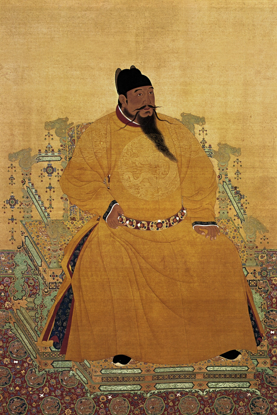
At the heart of Beijing lies THE FORBIDDEN CITY, home for about five hundred years to twenty-four Ming and Qing dynasty emperors (1420-1911.)  The giant complex of brilliant gold, yellow, red, blue and green hues reflects a once-rigid hierarchical structure, extravagant imperial living, and a belief in the rulers' omnipotence and divinity.  

It is important to understand that these emperors regarded all of China's land and people as their personal property.  From his throne on high and hidden behind a screen of smoke, the emperor ruled as military commander, law-maker, judge, government administrator, moral leader, patron of the arts and learning.  

Today the Forbidden City is a well-preserved palace museum displaying countless works by China's finest artists, architects, craftsmen, and poets.  Indeed, its rooms are dusty and show signs of aging despite frequent restoration efforts.  But in my opinion, the layers of loess only add charm and calm to this sprawling labyrinth of courtyards and assembly halls.  
Note:  If you visit this museum, be advised to wear comfortable shoes.  This woman obviously did not read the guide books (and lacks common sense).  See what ridiculous footwear she was wearing?!

Please allow me to give you a brief overview of the city's magnificent history...
Only the Emperor Wore Yellow

After the collapse of the Mongol (Yuan) dynasty, the Ming emperor Yongle usurped the throne from his uncle in a bloody civil war.  Soon thereafter he laid out the Forbidden City upon the site of the former Mongol ruler, Kublai Khan's winter capital (made famous by the Italian explorer, Marco Polo)--and within riding distance of the Great Wall It took over one million laborers and artisans to build the city out of the finest Chinese materials: lacquer, marble, exquisite tiles and precious woods.   

In keeping with the ancient idea of feng shui, (harmonizing the human existence with the cosmos and surrounding natural environment), the palace was faced south with gates fixed in all four cardinal directions (north, south, east and west)

Grandiose buildings and spaces were laid out in symmetry and identified with organs of the human body: the head, trachea, heart, and so forth.  However, despite the city's blaze of color and immense size, it was actually quite an isolated place for the inhabitants.  Those who dwelt inside the fortress walls knew little of country life, and had existences unimaginable to the masses.   


According to feng shui tradition, a fifth cardinal direction also exists:  the Center.  That was the location from which the Son of Heaven (the emperor) fostered a harmonious relationship between earthly affairs and the cosmos.  As intercessor for his subjects, he felt a heavy burden, for he alone worshiped HeavenHe alone made effective sacrificesHe alone had the duty to avoid Heaven's wrath (in the form of famines, earthquakes, floods, droughts, natural disasters)And he alone was responsible for earning Heaven's blessing upon China.  It all required strict adherence to ancient traditions and proper conduct:  pure moral behavior, devotion to religious rituals, and scrupulous government administration.  Only if "good fortune" failed to come was overthrow of the dynasty permissible.  In such case, the Emperor lost the "Mandate of Heaven." 

Besides constructing the Forbidden City, Yongle is also famous for commissioning six treasure ship voyages led by Admiral Zheng He.  While showing off China's wealth and military might around the Indian Ocean, his officials demanded tribute (gifts) from countries as far away as East Africa.  The giant fleets returned home heavily-laden with loot:  vessels of gold, silver and porcelain, carvings of jade, ivory and scented wood, gems, perfumes, richly embroidered silk and wool fabrics, medicines, and even a giraffe for the imperial zoo.  The Forbidden City stored most of it-- and following centuries collected ever more.  

While treasures flowed in, edicts and memorials flowed out.  Like all bureaucracies, the Chinese officials produced much paperwork.   Many documents per day were submitted to the Emperor, most dealing with routine matters of state but some requiring heightened attention.  Private matters written on long rolls of paper often required his personal notations--always written in red ink.  While business matters were handled privately, grand audiences were summoned solely to demonstrate the power of the Son of Heaven.  When the Emperor was absent from these ceremonial affairs, reverence was paid to an empty throne

Besides the Empress and scores of concubines, 3,300 eunuchs were in the court on any one day, scurrying about performing various functions.  Out of economic necessity, most eunuchs had actually volunteered for castration!  One old eunuch said, "It seemed a little thing to give up one pleasure for so many.  My parents were poor, yet by suffering that small change I could be sure of an easy life in surroundings of beauty and magnificence; I could aspire to intimate companionship with lovely women unmarred by their fear or distrust of me.  I could even hope for power and wealth of my own."  Depending upon one's perspective, the Forbidden City might appear as a great fortress from a life of troubles-- or a gilded prison.

No doubt, the Forbidden City was filled with petty, lonely, quarrelsome women. However, no fragments of journals or diaries by concubines have been found in existence to tell the stories!  The woman's sole purpose was to lie in the emperor's bed for a brief time in the hopes that she might eventually bear him a son.  Immediately following, eunuchs escorted her from the Emperor's bedchamber to one adjacent where she spent the remainder of the night utterly alone.  If only the cracks in the walls could speak about the jealousies, sorrows, boredom, idleness, and intrigue inside the Forbidden City!  

China's Son of Heaven ruled over the largest population in the world.  For example, in the year 1500, Peking (now called Beijing and the Forbidden City is still the center) was the largest city in the world with 672,000 people.  It was followed by three other Chinese cities:  Hangchow:  275,000, Nanking: 285,000, and Canton: 25,000.   Here are estimated populations for other major cities in 1500:  Cairo, Egypt: 450,000,  Paris, France: 225,000, Venice, Italy: 115,000, and London, England: 50,000

A Large Statue of the Great Helmsman
"Revolutionary Realism" Art


TODAY, with over 1.3 billion people, China is still the largest country in the world and has been ruled since 1949 by the world's largest political party, the Chinese Communist Party, or CPC. After the fall of the last dynasty, the Nationalists briefly ruled China before Mao's CPC fought its way to power.  Question:  Could the CPC lose the "Mandate of Heaven" today?  If so, how?


Monday, March 24, 2014

Lessons From Beijing


Black Bamboo Park
While this blog is about Beijing, and not Tokyo, I still want to share what I learned and experienced during our week in China's capital.  When the plane landed, the sun was high in the sky but it couldn't penetrate the thick gray pollution hovering above Beijing.  The gritty air irritated our nasal passages and throats, and my chest felt like someone was standing on it as I strolled through the park.  Notice the gray skies above Black Bamboo Park near our hotel where dancing, exercising, singing and other activities were underway in every available space. I marveled at the way in which the people kept moving, having a grand time despite the heavy, abrasive air.
If someone trustworthy could have held my valuables, I would have joined right in! I was the only obvious foreigner in the park and dancers delighted in my amazement. Everyone participated to learn and have a good time; it mattered not whether one was a beginner or an accomplished dancer/musician.   The exercise and stress release will surely help China's people live healthier, longer lives but the pollution will ultimately take its toll.  (This is no way to take care of your citizens, CPC!)      

As a way to control the population and pollution problem, one must have a license to live in Beijing.  The city has 20 million legal residents plus countless illegal laborers who migrate from the countryside and whose children are not allowed to attend Beijing schools.  Besides controlling the number of residents (and their use of cooking grills), it remains a mystery to me how the government ultimately plans to get air and water pollution under control.  (Note: Many foreigners are leaving due to the pollution.)

To be fair, China's economy has made tremendous growth in recent decades.  Infrastructure, business, education, health, diet, and cultural opportunities have all improved immensely. China's trains and subway systems are far beyond anything found in the U.S. Their airports are modern and clean.   Twenty years ago most people were on bicycles.  Some still are.  (A load like this nearly collided with me as I crossed the street with the almost-meaningless green pedestrian light.)
 
There is no penalty for twins!
 At the park this little darling (left) was out for a walk with her mother and she looked at me with such curiosity. Her mother spoke only a few words of English but asked, "Do you have TWO children?" Answering "Yes", she then asked, "A BOY and a GIRL??" "Yes," I replied. She said that she also hopes to have a boy. China has eased up on its One-Child-Only policy. Two children are permitted if either parent is an only child. (A third child comes with a whopping fine!) The new policy currently applies to certain regions but will gradually expand to the rest of the country. The one-child-only policy has produced many changes and concerns: spoiled children, an only son or daughter burdened with elder care, and great angst over the child's health and safety.   A friend told me that parents worry about kidnappers snatching their children.  Some parents who cannot have their own child pay exorbitant prices to purchase one, especially a boy.  "We would never find our child," she said, "And even worse, some children are taken for their organs."  

While guns are illegal in China, acts of violence are carried out by knives as happened recently in Tiananmen Square.  The deadly event resulted in today's long lines at security checks whereby anxious mobs are held in disorderly fashion waiting for bodies to be searched and personal items run through scanners.  Doug and I got caught up in one mob.  There were many country people for whom this was a once-in-a-lifetime opportunity to see the "hollowed Mao square" and Forbidden City.  While they were endlessly fascinated by the tall foreigners in their midst, they were in no mood to wait!! Pushing and shoving, they charged ahead, disregarding police orders to remain behind the barricade. In frustration and fear, one young officer screamed at the crowd and raised his billy club to whack unruly folks on the head.  Fearing that someone would get trampled, he called for back-up and six veteran police came running to quell the crowd.  But old and young alike continued to heave forward.  As we neared the front a short, sun-wrinkled, old lady gave me a great push.  The officer yelled at her but she did not stop until my fellow traveler shoved her back into place.  My advice:  Beware of little old ladies in Beijing


Michelle Obama and entourage chose to drop by Beijing during our visit, even stopping at the same historic and tourist sites (Great Wall, Forbidden City...)  They visited the second-ranked high school in the country where Michelle played ping pong, tried calligraphy and wrote four Chinese characters.  Affiliated with Beijing Normal University, High School #2 is the sister school of Washington D.C.'s elite Sidwell Friends School where Malia Obama attends. Given that Facebook, the New York Times, my school email, and this blog were all blocked in China, I was particularly delighted that Michelle's non-political visit included mention in her Peking University address of the importance of freedom of speech, particularly the importance of "hearing all sides." (Note: Despite that claim, the adversarial American press greatly resents its limited access to information about her goodwill tour.)  

While waiting in line at the airport we met Sidwell's traveling middle school group that also visited Beijing and High School #2 during their "minimester." The teacher extolled the incredible facilities and educational opportunities available to the well-connected at High School #2.   My not-well-connected friend told me that she paid enormous bribes so that her own children could be "introduced to the opportunity" of an excellent public school education. (There are only public schools in Beijing.)   Admission to elite middle and high schools involves not only personal connections and bribes paid but also test scores, character references, English-proficiency and talent evaluations.  With such a huge population pool, children experience INTENSE competition and UNRELENTINGLY RIGOROUS daily routines.  My friend said, "I hate being a 'Tiger Mom' but I have no other choice."

We saw some examples of government waste at its finest: money spent on defective equipment and construction projects standing unused.  We heard personal stories of government bureaucrats taking the family's farm land and giving it to cronies to construct a golf resort, thereby destroying livelihoods and providing minimal compensation in return.  (With no remedy in the courts, of course.)  Multiply these personal narratives times millions and you have the very essence of China.  These stories are upsetting to say the least.  And they should also serve as a caution for our own nation The rule of law must be upheld.  And citizens must have confidence that their hard-earned taxes are spent justly and discerningly.  


Tuesday, March 11, 2014

Three Unifiers and Three Monkeys

To better understand the turbulent developments of modern Japan, it is helpful to understand the backdrop of over two centuries of Tokugawa feudal rule. This period is most characterized by  harsh laws and restrictions placed upon physical and social mobility, and the absence of warfareWhile the Emperor lived in the imperial city of Kyoto and was revered as god, he had no military power.  Japan was ruled by a dictator called a Shogun.  Let's begin with a look at the three Great Unifiers of Japan whose  conquests led to the Tokugawa Shogunate.  How did they gain legitimacy and how did they maintain power?

Great Unifier #1
In 1573 after a long period of civil war where power struggles were carried out amongst diamyo with samurai armies, much of Japan came under the control of a ruthless and passionate landlord, Oda Nobunaga.  He became the first of three great military dictators.  Realizing that legitimate authority could not be maintained merely through force, he promoted himself as a divine ruler. Nobunaga went to war against popular religious sects, killing tens of thousands of rivals, and demanding that friend and foe worship him as a deity.  He assured his vassals that their sacrifice in this life would benefit them in the next.  He presented himself as the embodiment of tenka which meant "under heaven" and referred to the realm of Japan.  His loyal vassals pledged, "for the tenka (Japan), for Nobunaga."  However, Nobunaga stopped short of seeking the title of Shogun because he refused to become subordinate to the Emperor who granted this ancient military title.  Shogun literally meant "Commander-in-Chief for quelling the barbarians."  Though historians have called him "the magnificent savage," Nobunaga also developed political institutions that his successors found beneficial.  In the end, after a military defeat, Nobunaga committed ritual suicide.  His loyal retainer, Toyotomi Hideyoshi, became the second Unifier of Japan. 

Great Unifier #2
While Toyotomi Hideyoshi (nicknamed 'the Bald Rat' by his wife and 'the Monkey' by his contemporaries) continued the unification of Japan, he also promoted himself as a deity.  He even hosted the Emperor (believed to have descended from the sun goddess) as an equal in his Kyoto castle!   Hideyoshi established festivals and began durable bureaucratic traditions.   Though unsuccessful, he called for a national campaign to conquer Ming China via an invasion of Korea.  Finally, he arranged for the Great Imperial Shrine to be built in Ise upon his death in order to honor him as deity.  Though his health was failing, he was murdered by one of his generals allied with Ieyasu Tokugawa.  Oh, how his successor resented the Great Shrine and sought to wipe it out!  In Nikko we saw the gaudy results of this attempt to adumbrate (overshadow) his predecessor. More on that in a moment.   (photos below) 

Great Unifier #3
The third Unifer, Ieyasu Tokugawa, was a harsh ruler. Feared on the battlefield, he won final victory over forces loyal to Hideyoshi's son in the famous battle of Sekigahara in 1600.  Ieyasu was respected for his incredible patience as a tactician.  Once Ieyasu put all diamyo directly under his control and issued the final expulsion (and execution) of all known Christians in 1614, his reign went unchallenged.  Taking the title of Shogun from the Emperor, he placed the Emperor under his control financially and militarily. After two years as Shogun and still in good health, Ieyasu "retired", appointing his son heir to the throne.  However, Ieyasu continued to rule from behind the scenes, increasing Japan's social rigidity and reducing the amount of control people generally had over their own lives.  With the exception of the short, bloody Shimabara Rebellion in 1637-1638 (caused largely by over-taxation and famine), Japan experienced a two hundred year period of peace and stability.     All wisdom was said to come from Ieyasu.

"Life is like a long journey with a heavy burden."  -Ieyasu Tokugawa

It was believed that the order Ieyasu brought to Japan was rooted in the cosmos. Three core beliefs legitimized Tokugawa rule: 
1.  Hierarchy is natural and just (fair).
2.  Great virtues include selfless service and acceptance of one's place in the hierarchy.
3.  Tokugawa Ieyasu is the source of all wisdom.  

For ReviewThere is a famous saying that will help you remember these three Great Unifiers:

Nobunaga, Hideyoshi and Tokugawa were watching a cuckoo bird waiting for it to sing, but the bird wouldn't sing.  Nobunaga says "Little bird, if you don't sing I will kill you."  Hideyoshi says "Little bird, if you don't sing, I'll make you sing."  Then Tokugawa Ieyasu says to the bird "Little bird, if you don't sing I will wait for you to sing." 

In accordance with Ieyasu's will, his son and grandson built the ostentatious Toshogu Shrine in Nikko. (Today Nikko is about a two-hour train ride north of Tokyo.)   Just as I did, tens of thousands of visitors stroll through the shrine each year viewing the brilliant colors and exceptional artistry.  
Here Ieyasu Tokugawa is enshrined and his remains are entombed.   During the Edo period, the Tokugawa shogunate conducted stately processions from the capital city of Edo to Toshogu Shrine in Nikko.  Annually the shrine holds spring and autumn festivals reenacting these processions.  They are called "processions of a thousand warriors." 


"See no evil, hear no evil, speak no evil."
Below is the most famous of eight panels referred to as the "Three Monkeys."  Each panel symbolizes part of the life cycle of humanity.  The lesson here is that a properly instructed baby monkey will grow up to become a good parent and the cycle of birth-life-death will continue indefinitely.   
This panel admonishes youngsters to live well, to  "see no evil, hear no evil, speak no evil."   (The philosophical origins of this saying may date back to the 2nd-4th century BC.)